If you want a screen-free activity that feels calm but still makes your child think, Sudoku is a surprisingly good fit. It teaches pattern recognition, patience, and logical scanning without asking kids to memorize facts or race against flashing animations.
Sudoku may look like a numbers game for adults, but at its core it is a puzzle about noticing what fits and what does not. That is exactly why it can work so well for children when you introduce it gently.
Here is how to make Sudoku feel inviting instead of intimidating.
TIP
Start smaller than you think: a 4x4 or 6x6 grid is usually a better first win than a standard 9x9 puzzle. The goal at the start is understanding the rule, not finishing a "real" Sudoku.
Why Sudoku Works for Kids
Many parents assume Sudoku is basically math practice because the grid uses numbers. In reality, the puzzle is mostly about logic.
When kids work through a Sudoku grid, they practice:
- Pattern recognition: noticing what is already present and what is missing.
- Focused scanning: checking rows, columns, and boxes without rushing.
- Working memory: holding a few possibilities in mind while comparing spaces.
- Patience: learning that being stuck is part of the process, not a sign of failure.
Those are useful skills well beyond puzzles. They support schoolwork, problem solving, and the ability to slow down and think through a task step by step.
Start With the Rule, Not the Full Puzzle
The hardest part for beginners is usually not the logic itself. It is understanding the instructions.
Keep the explanation simple:
- Each number gets used once in every row.
- Each number gets used once in every column.
- Each number gets used once in each box or mini-square.
That is enough for a first session.
You can phrase it in kid-friendly language:
- "Every number gets one seat in this row."
- "No repeats in the column."
- "This little square needs one of each number too."
If your child is young, have them point with a finger while checking a row or column. That physical "scanning" motion helps them slow down and look carefully instead of guessing.
Pick a Kid-Friendly Starting Point
A standard 9x9 grid can be too much at first, even for bright kids who love puzzles.
A better progression is:
- 4x4: best for understanding the no-repeats idea.
- 6x6: best for building confidence with slightly longer scanning.
- 9x9 easy: best once the smaller grids feel familiar and calm.
It is better to finish a tiny puzzle happily than to wrestle with a full-size one and decide Sudoku is "too hard."
If a child enjoys coloring books or other low-pressure paper activities, that is often a good sign they may also enjoy beginner Sudoku in short bursts.
Teach by Asking Questions
Try not to lecture through the whole puzzle. Ask small questions instead:
- "What number is missing from this row?"
- "Can a
3go here if there is already a3in the box?" - "Which spot is left after you scan the column?"
This keeps the child active in the solving process. You are guiding their attention, not taking over the puzzle.
One useful habit is to focus on just one digit at a time. For example, ask them to find where the 2 belongs in a small grid before thinking about every number at once.
Keep Sessions Short and Pleasant
Sudoku works best for kids when it feels like a small ritual, not an assignment.
Good moments for a short puzzle session:
- At breakfast with one printed grid on the table.
- In a waiting room instead of handing over a phone.
- After school as a 5- to 10-minute reset.
- As quiet family puzzle time with one adult solving alongside them.
NOTE
Stop while it is still going well. Ending after one good puzzle or one clear breakthrough keeps the next session easier to start.
If the child is tired, distracted, or frustrated, step back down in difficulty or pause for the day. The habit matters more than the pace of progress.
When to Move Up to 9x9
Most kids are ready for an easy 9x9 grid when they can handle smaller puzzles without a lot of confusion about the rules.
Look for these signs:
- They rarely forget the no-repeats rule.
- They can scan a row and column without much help.
- They stay engaged for several minutes without guessing randomly.
Once you move to 9x9, keep the same teaching style. The puzzle is not fundamentally different; it just asks for longer attention.
That is also a good moment to introduce simple pencil marks. Tiny candidate notes can help older kids stay organized without trying to hold every possibility in their head.
Make It Feel Screen-Free, Not Anti-Fun
Children do not need Sudoku because screens are "bad." They need variety.
What makes Sudoku valuable is that it offers a different kind of stimulation:
- Quiet instead of noisy.
- Deliberate instead of reactive.
- Logical instead of fast.
For some kids, that shift is exactly what helps them settle.
If you want to keep things light, pair Sudoku with a cozy routine:
- A sharpened pencil.
- Good light.
- One easy puzzle.
- A small celebration when they solve a tricky step.
A Simple Place to Start
If you're ready to move beyond digital screens and into focused, paper-and-pencil practice, we have two new collections designed specifically for different age groups:
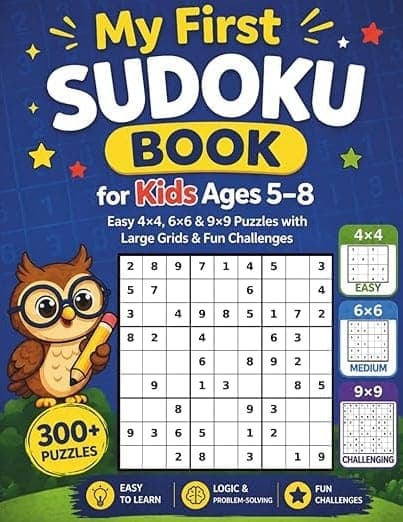
- For Ages 5–8: My First Sudoku Book for Kids — Features extra-large 4x4, 6x6, and easy 9x9 grids with a gentle learning curve.
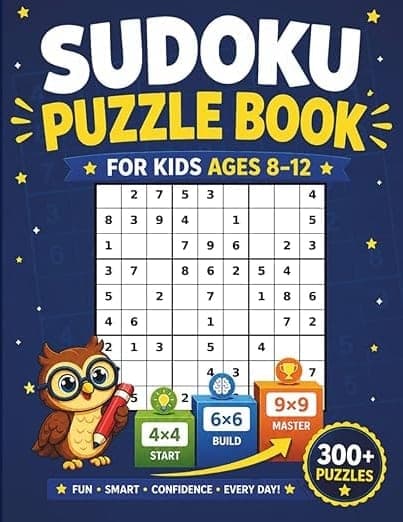
- For Ages 8–12: Sudoku Puzzle Book for Kids — A progressive collection that adds diagonal and even-odd puzzles for a bit more variety.
You can also continue practicing for free with our daily tools:
- Try an easy daily puzzle together: Solve Now
- Print a few pages for quiet practice: Free Sudoku Printables
The goal is not to create a tiny Sudoku prodigy. It is to give your child one more calm, screen-free way to think, notice patterns, and enjoy small wins on paper.
Keep Going
- Understand the ritual: The Psychology of the Grid
- Master the scanning: Classic Sudoku Guide
- Choose your level: How to Progress from Easy to Hard
- Avoid common pitfalls: Top 5 Beginner Mistakes